Leave Your Message
Engineering Intelligence & Heavy Mineral Recovery

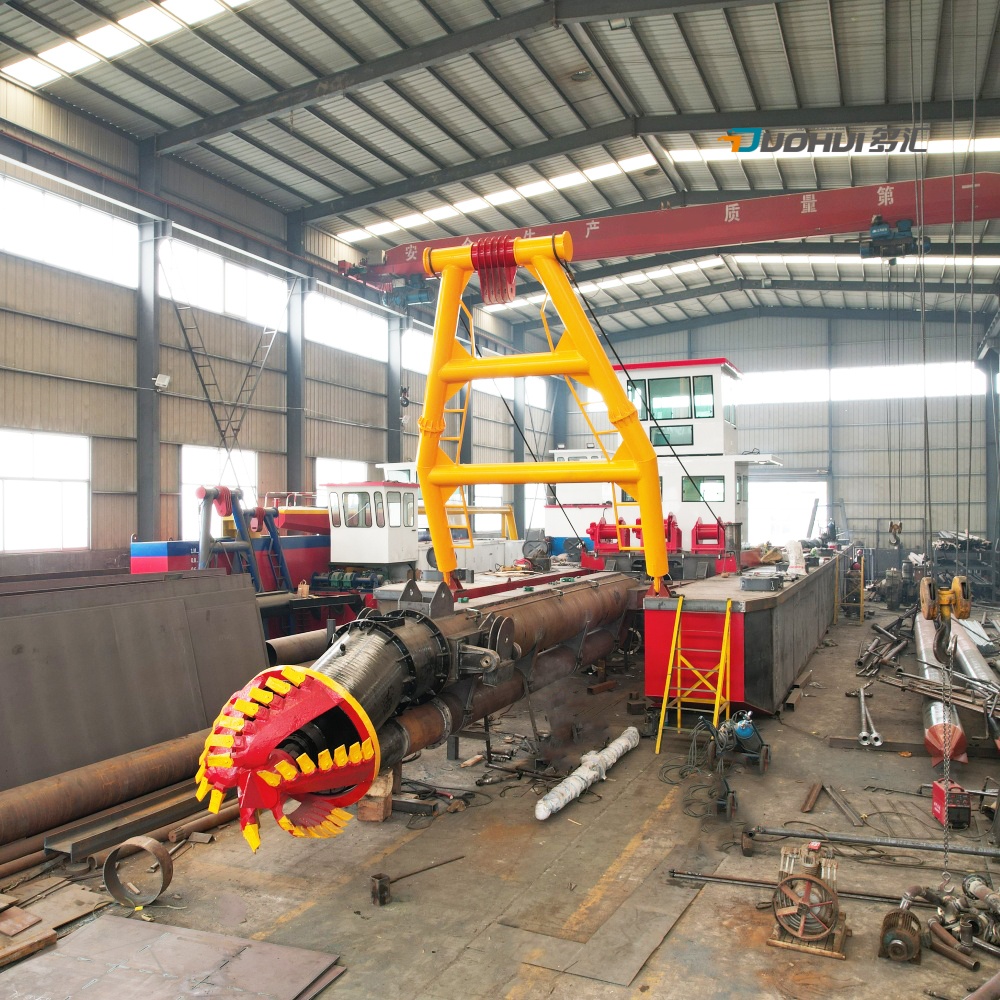
Causeway Dredger For Gold Extraction

Advanced hydraulic excavation, high-tonnage sediment processing, and integrated mineral beneficiation engineered for extreme alluvial, littoral, and causeway gold mining projects worldwide.

The Evolution of Placer Gold Recovery in Causeway & Littoral Zones

The global mining sector is witnessing a decisive shift toward unconventional and secondary alluvial deposits located in complex transitional environments such as coastal causeways, estuary mudflats, and braided river networks. High-grade terrestrial deposits have experienced steady depletion, compelling commercial mining operators to target rich auriferous paleo-channels buried beneath heavy overburden, saturated silts, and marine gravel matrices.

Operating in these transitional aquatic-terrestrial interfaces requires machinery that transcends traditional dry excavation limitations. Standard land-based excavators suffer from severe mobility bottlenecks, catastrophic ground bearing capacity failure, and erratic processing feeding cycles. Conversely, a purpose-engineered causeway dredger for gold extraction bridges this gap by integrating robust continuous excavation mechanisms, high-pressure hydraulic transport, and on-board gravity beneficiation circuits.

Modern commercial operations demand continuous high-throughput slurry displacement (ranging from 500 m³/h to over 4,500 m³/h) paired with meticulous recovery matrices capable of capturing fine, flaky, and colloidal gold particles down to 40 microns without introducing toxic reagents into delicate waterways.

AU

Engineering Performance Standards

98.5% Gravity Recovery Efficiency for Free Gold
4,500 m³/h Max Continuous Slurry Displacement
35 Meters Subsea & Fluvial Dredging Reach
0% Reagents Mercury & Cyanide Free Extraction

Integrated Mechanical Architecture & Hydro-Separation Systems

Understanding how industrial causeway dredgers synthesize heavy mechanical dislodgement, hydraulic transportation, and multistage centrifugal recovery on a single floating or amphibious platform.

⚙

Heavy-Duty Cutter & Bucket Heads

Designed with specialized tungsten-carbide teeth geometries, the dredging head breaks through tightly cemented clay-gravel layers, hardpan, and compacted riverbed conglomerates where heavy alluvial gold nuggets typically accumulate.

⚒

Wear-Resistant Slurry Pumping

High-chromium alloy underwater slurry pumps generate sustained laminar suction power, lifting high-density solids (up to 40% concentration) directly from subaqueous strata without premature impeller cavitation or excessive abrasive wear.

⚛

Multi-Stage Trommel Screening

Equipped with internal high-pressure wash bars, heavy rotary trommels disintegrate stubborn sticky clay balls and scrub coarse boulders (>20mm), washing clean auriferous sand slurry into the precision separation circuit.

☸

Centrifugal Concentrators

Semi-continuous or continuous Knelson-type centrifugal concentrators generate forces exceeding 60G, ensuring micro-fine particulate gold and tellurides are securely separated from lower-density siliceous sands.

▦

Pulsating Jigs & Sluice Boxes

Secondary scavenging circuits utilizing high-frequency mineral jigs combined with pneumatic-riffled sluices lined with specialized gold capture carpeting guarantee zero-loss recovery of irregular placer flakes.

🛡

Automated Spud & Winch Control

PLC-managed spud carriage traversing mechanisms paired with dynamic constant-tension winches allow smooth parallel sweep patterns across causeways and waterways with micron-level depth positioning.

Challenging Application Scenarios for Causeway Gold Extraction

1. Coastal Causeway & Estuary Littoral Mining: Littoral sandbars frequently host massive marine placer deposits formed by centuries of fluvial gold discharge. Causeway dredgers withstand tidal variations and high-salinity corrosive environments while operating close to shoreline access bridges.

2. Historical Tailings & Overburden Reprocessing: Early-generation gold mining ventures discarded billions of tons of tailings containing unrecovered ultra-fine gold particles. Causeway dredgers continuously re-excavate saturated tailings ponds, liberating residual precious metals with negligible re-crushing energy expenditure.

3. Inland Braided River Hardpan Extraction: In tropical and sub-arctic gold belts (such as West Africa, Southeast Asia, Siberia, and the Yukon), heavy alluvial gold settles deep within dense bedrock depressions. Causeway cutter dredgers physically shear the top bedrock mantle to recover embedded nuggets unreachable by manual methods.

  • Submersible dredging depths adjustable from 2.5 meters to over 35 meters.
  • Modular pontoon construction permitting fast overland container transport.
  • High adaptability to variable water depths, mudflat zones, and shallow causeway banks.
GEO

Key Operational Highlights

Deploying an engineering-grade causeway dredge guarantees non-stop 24/7 excavation with direct mineral sorting, entirely eliminating double handling, truck haulage costs, and haul road maintenance issues common in traditional open-pit placer mines.

-65% Lower Operating Expense vs. Conventional Dry Pit Hauling
24/7 Uninterrupted Hydraulic Slurry Processing Continuous Cycle

Smart Dredging, Intelligent Sensor Arrays & ESG Stewardship

The convergence of intelligent hydro-acoustic profiling, automated slurry density control, and chemical-free processing is defining the next generation of alluvial mining equipment.

The contemporary gold dredging sector is rapidly integrating AI-assisted telemetry and sub-bottom sonar profiling. Modern dredger cockpits are equipped with real-time acoustic sensors that analyze seabed stratigraphy ahead of the cutterhead, allowing human operators or autonomous PLC algorithms to lock onto the precise geological gold-bearing pay-layer while avoiding barren overburden.

Furthermore, automated density control loops adjust dredge pump RPM and swing speeds instantaneously when encountering varying sediment viscosities. This steady fluidic velocity ensures maximum trommel washing efficiency and prevents scouring across centrifugal concentrator riffles, which is the primary cause of fine-gold slurry losses in legacy systems.

From an ESG (Environmental, Social, and Governance) standpoint, causeway dredgers represent the cleanest vector for placer mineral production. By relying strictly on high-density gravity separation, water-jet scrubbing, and physical centrifugal flotation, these industrial plants operate with zero mercury (Hg), zero cyanide (NaCN), and fully closed-loop recirculated process water. Tailings are simultaneously deposited behind the vessel to facilitate progressive wetland rehabilitation and riverbank stabilizing.

Hybrid and all-electric drive configurations have emerged as key technological milestones. High-efficiency marine diesel engines linked with permanent-magnet generators significantly reduce carbon footprints and diesel fuel logistics in remote mining regions. Variable frequency drives (VFD) provide smooth torque curves for heavy cutter mechanisms, dramatically extending the service lifetime of drive shafts, bearings, and hydraulic circuits.

  • Acoustic Pay-Dirt Mapping: Precise targeting of high-yield auriferous strata.
  • Intelligent Density Modulation: Constant 35-40% solid concentration feed.
  • 100% Mercury-Free Beneficiation: Pristine environmental and water safety compliance.
  • Continuous Tailings Reclamation: Real-time backfilling and riverbed reshaping.
  • Remote Cloud Fleet Telematics: Satellite monitoring of hourly throughput and fuel burn.

Weifang Duohui Intelligent Manufacturing

Cutting-edge Technology | High-Quality Equipment | Comprehensive Services

Weifang Duohui Intelligent Manufacturing Technology Co., Ltd. has been deeply engaged in the field of dredging and cleaning equipment. With its strong R&D capabilities as the core, it focuses on the research, manufacturing, and full-chain sales of high-quality dredging equipment. By leveraging a mature technical system and intelligent manufacturing capabilities, it has developed engineering equipment suitable for various scenarios. 

The product is widely used in various water conservancy projects such as river dredging, waterway excavation, port construction, and reservoir management. The main business includes a full range of core equipment: dredging vessels, amphibious multi-functional dredging vessels, environmental clean-up vessels, high-concentration clean-up vessels, grass-cutting vessels, soft foundation spiral multi-functional platforms, as well as salt mine mining vessels, large tin mining vessels, powerful mixing and solidification machines, mud solidification equipment, and gold selection equipment for sand mines, etc. These are various types of special engineering equipment for special projects. With technology, it empowers construction projects and fully meets the high-standard operation requirements in multiple fields such as water conservancy, mining, and environmental protection.

Frequently Asked Questions on Gold Dredging Engineering

Critical operational answers for mine developers, geotechnical engineers, and project managers.

What distinguishes a causeway dredger from standard river dredgers?

A causeway dredger is engineered for transitional shallow-to-medium aquatic environments featuring heavy sediment stratification, mudbanks, and littoral causeways. It incorporates heavy-duty cutting heads capable of excavating hard clay-gravel matrices, integrated multi-stage mineral beneficiation systems (trommels, centrifuges, jigs), and heavy anchoring spuds to maintain precise station-keeping against strong fluvial or tidal currents.

How does the system ensure high recovery rates for ultra-fine gold particles?

Our extraction circuits utilize a multi-tiered separation philosophy: pressurized high-volume scrubbing trommels disintegrate clay binders, while primary high-G centrifugal concentrators capture fine free gold (down to 200 mesh/74 microns). Secondary pulsating jigs and sluices capture coarse nuggets and flakes, achieving an overall recovery rate of up to 95-98.5% of free alluvial gold.

Can the dredging platform handle heavy clay and large river boulders?

Yes. The cutter heads are equipped with high-torque hydraulic motors and interchangeable alloy pick-points designed to break compacted hardpan and clay balls. In addition, the internal trommel screen features heavy internal spiral lifters and water jet knives that continuously wash and reject oversized boulders (+20mm to +100mm) via dedicated side-discharge rock chutes.

What are the power options and logistics requirements for remote sites?

Dredgers can be configured with premium marine diesel-hydraulic systems, diesel-electric generator sets, or fully electric drives powered by shore-side grids. All hulls are fabricated with modular sectional pontoons that fit into standard 40-foot HQ shipping containers or flat racks for straightforward overland and overseas transportation.